What Are the Best Sleep Hygiene Habits for a Better Night’s Sleep?
Quality sleep is essential for energy, concentration, and good health. But if you can’t fall asleep or wake up a lot at night, getting a good night’s rest the next day can be a challenge. A very practical way to improve sleep is to adopt healthy sleep habits.
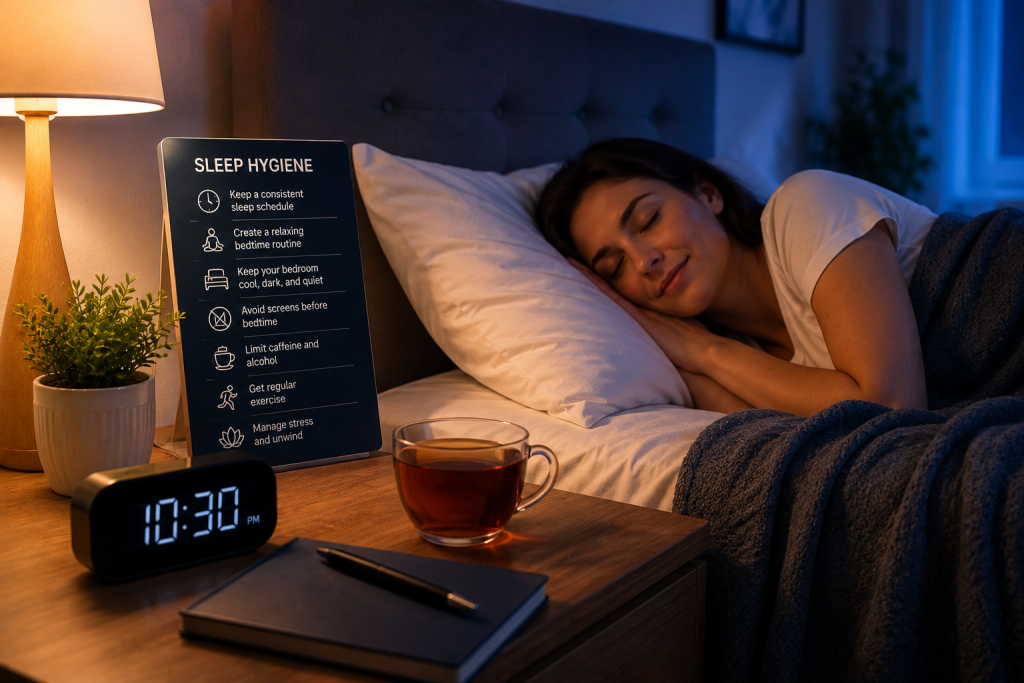
Sleep hygiene is a set of behaviours and environmental habits to help you sleep well regularly. These habits tend to be basic, though they are best implemented on a regular basis. Making a few changes to your bedtime routine can be supportive of good sleep, from setting up a consistent bedtime to creating a comfortable bedroom.
What is Sleep Hygiene and Why is it Important?
Sleep hygiene is lifestyle and sleep-related practices and tips that help you sleep better. It covers your bedtime routine, any evening activities, bedroom environment, electronic devices, food and drink, and daily routine.
Good sleep hygiene will not help you sleep better all the time. It instead establishes an atmosphere which allows your body and mind to more easily drift into sleep.
Routine is important as the body responds to predictable habits. Use the same bedtime and morning schedule; this can help develop a routine.
What is the Impact of a Steady Sleep Pattern on Sleep?
The most helpful sleep hygiene is to adhere to a regular sleep and wake cycle. Go to bed and get up at the same time daily, if possible, even during the weekend.
Regularity can assist your system to develop a predictable rhythm. If the bedtime and morning times vary each day significantly, it can be more difficult to establish a consistent schedule.
If you have to make a change to your schedule, it might be easier to make it in small increments rather than hours, rather than making a drastic overnight change.
Why is a Soothing Sleeping Habit Important?
A soothing bedtime routine may be helpful to cue that it is bedtime. Take a little time to relax before going to bed, rather than jumping straight to bed from a stressful activity.
Catching a few minutes of quiet after work, with a read book, soothing music, warm shower, gentle stretching, or a few minutes of calm can be helpful elements of a bedtime routine.
The aim is to establish a routine for transitioning from daytime activities to sleep.
How Does Screen Time Affect Sleep Habits?
Evenings can become a time where phones, tablets, computers, or the television take up a significant amount of time. But some individuals may find it harder to relax if they use stimulating content immediately preceding bedtime.
When a mind needs to slow down, notifications, social media, games, work messages, and exciting videos might keep it occupied.
In addition to other sleep hygiene strategies, try to limit screen time before bed. Avoid bringing your cell phone into the bedroom, which limits temptation to look at your notifications while sleeping.
What can you do to Make Your Sleep Environment Better?
The comfort of your bedroom can make a big difference in your sleep. A sleep environment is normally quiet, comfortable, and dark enough.
The temperature of the room is also crucial. Many prefer to sleep in a cooler environment, but that’s not always the case.
Good bedding, pillow, and mattress support can further enhance the bed environment. A neat bedroom can also help make the bedroom a relaxed space.
In cases where outside light is an issue, blackout curtains or an eye mask might be helpful. Some individuals may find earplugs or a steady background noise helpful for unwanted noises.
Why Caffeine Before Bed is a Bad Idea?
Caffeine is a stimulant which can disrupt sleep, especially in the late afternoon or evening. Coffee is a common source, but caffeine is also found in tea, energy drinks, chocolate, and a few other products.
Caffeine can have different effects on different people. It can be more or less irritating to certain people.
If you find that caffeine in the afternoon or evening is interfering with your sleep, try to limit your caffeine intake in the later part of the day. Another element of the workout that may be useful to take into account is how the body reacts to it.
What does Exercise have to Offer for Better Sleep?
Regular exercise can promote overall sleep quality and help to achieve a healthier lifestyle. People can be physically active by walking, cycling, swimming, strength training, or other activities.
However, for some, strenuous exercise right before sleep could be exciting. If late workouts cause you to be less relaxed, try working out earlier in the day.
The key is to keep yourself physically active and determine a schedule that fits into your sleep pattern.
What are the Effects of Daytime Naps on Sleep?
For some, napping can be helpful when they are tired; however, for others, napping in the late part of the day or for a long period may make it harder to get to sleep at night.
Taking a nap (if you decide to!) that is not too long and not taken too close to bedtime will help maintain your regular sleep schedule.
Each person is unique, so it can be beneficial to see if naps have any impact on nighttime sleep but enhance energy levels during the day.
What’s the Purpose of Developing a Relaxing Bedtime Ritual?
Your brain can learn to connect some activities with sleep if you have a routine before going to bed at night. If you have a routine before bedtime at night, then your brain can learn to make an association between some activities and sleep. You can, for instance, turn the lights down, get ready for bed, read for a few minutes, and then go to bed around the same time.
Doing the same routine can make going to sleep seem more natural.
You don’t have to make the routine too complicated. A straightforward, repeatable program is more useful than a lengthy list of activities, in fact.
What can you do to Reduce Stress Before Going to Bed at Night?
An active mind and stress make it hard to get to sleep. When thinking about workplace tasks, deadlines, or concerns while lying in bed at night, it could be useful to get them down on paper before you go to sleep in case you are able to get them organized for tomorrow.
Slow breathing, meditation, a bit of stretching or a quiet reading may also help to make the transition to bedtime calmer.
It doesn’t always have to be to clear all your thoughts, but rather a chance to remove yourself from the routine of the day.
The Effects of Food and Drinks on Sleep Hygiene
What you eat can affect your comfort at night. For some, very large or heavy meals just before bedtime can be uncomfortable.
If you have a big meal late at night, it may be helpful to give yourself some time in between. A light snack could be more comfortable for some if they are hungry later in the evening.
Even if it relaxes a person and helps them sleep, alcohol can disrupt sleep. Knowing the effects of evening foods and beverages on sleeping can help you make better decisions.
What Makes Your Bed a Sleep-Friendly Place?
Your bed is ideally the place where you sleep and relax. Prolonged bed association with activity (work, play, or TV-viewing) can lead to a positive link between the bed and activity.
Spend your bedtime in bed only for sleep and other suitable activities (if possible). This can help to reinforce the mental association between turning in for bed and going to sleep.
A neat sleep area can also improve the nighttime experience.
If you can’t sleep, what is the best thing to do?
In an attempt to go to sleep can sometimes just make things feel worse. When awake for extended periods, try to get out of bed and engage in a quiet activity in low lighting until drowsy.
Try not to constantly look at the clock, as this will raise worry and concern about the lack of sleep.
If sleep problems occur regularly or are especially disruptive to the day, it is important to talk to an appropriate health professional about the problem.
Conclusion
Good sleep hygiene doesn’t need to be too complicated. When establishing a bedtime schedule, it is better to be consistent than perfect. Sticking to a sleep-wake schedule, minimizing evening stimulation, optimizing the sleep environment, physical activity, and evening routines are all factors that can contribute to better sleep.
Sleep needs and preferences vary from person to person, so it may take a while to work out what works for you. The trick is to make realistic changes and practice them regularly. If sleep difficulties persist after taking good care of yourself, you may need professional advice and guidance to determine if there are other issues or what to do next.